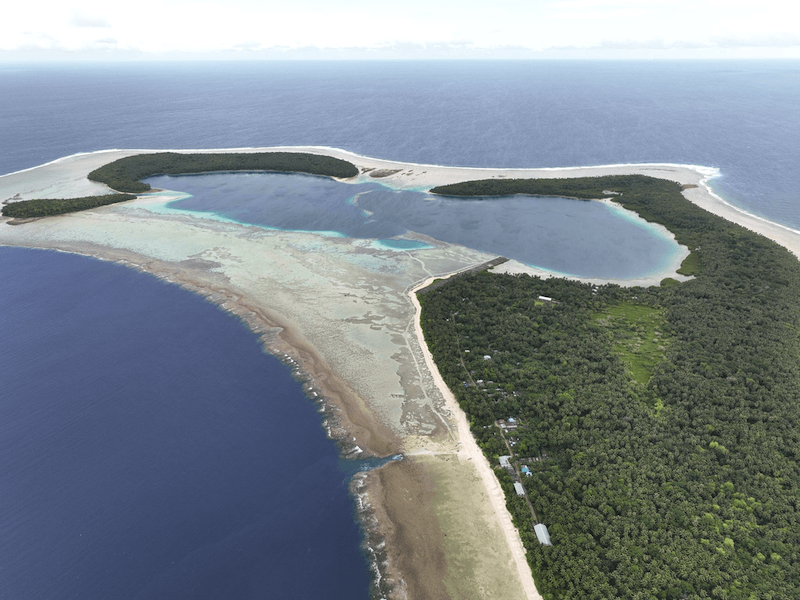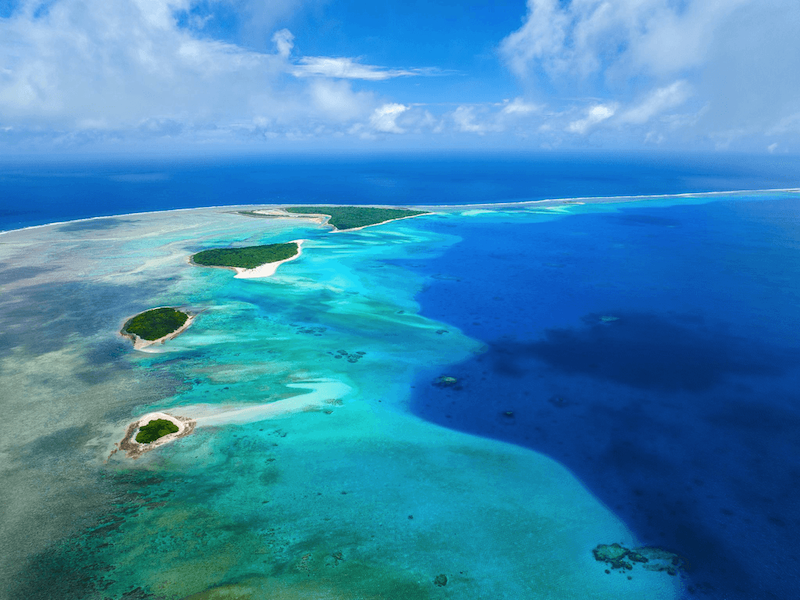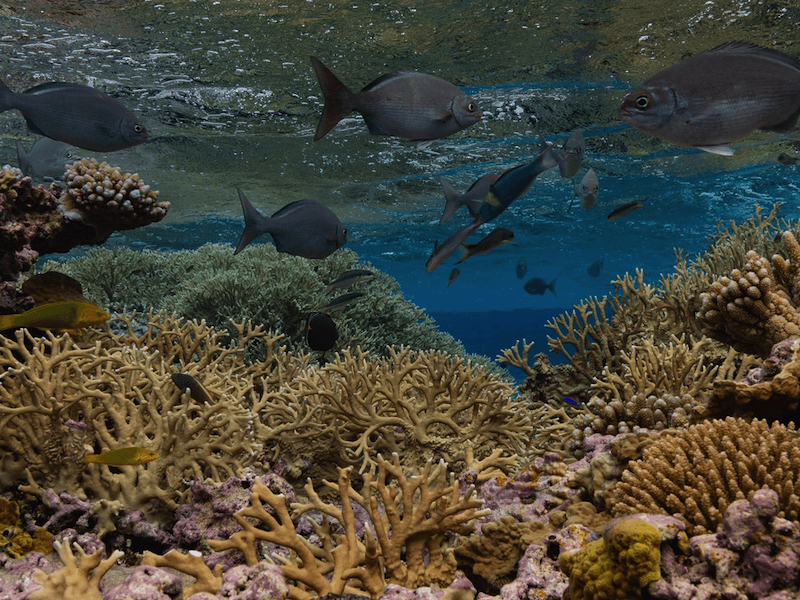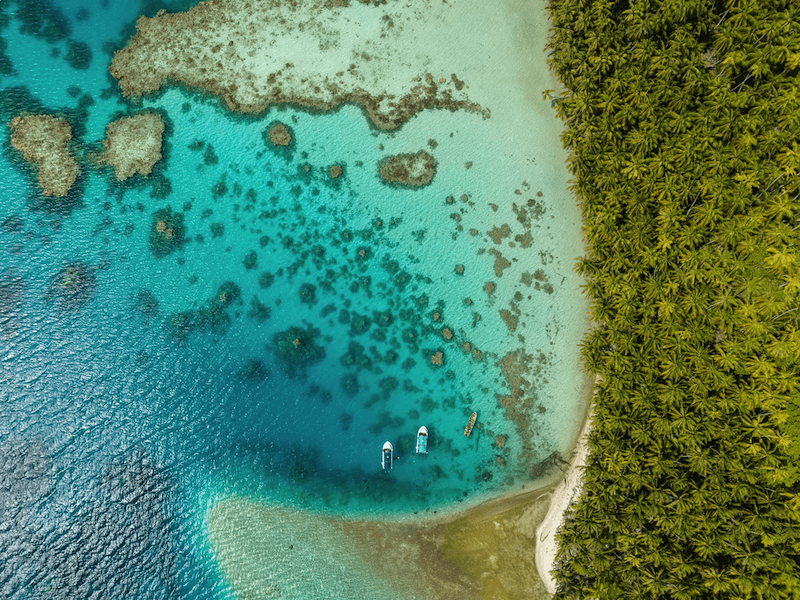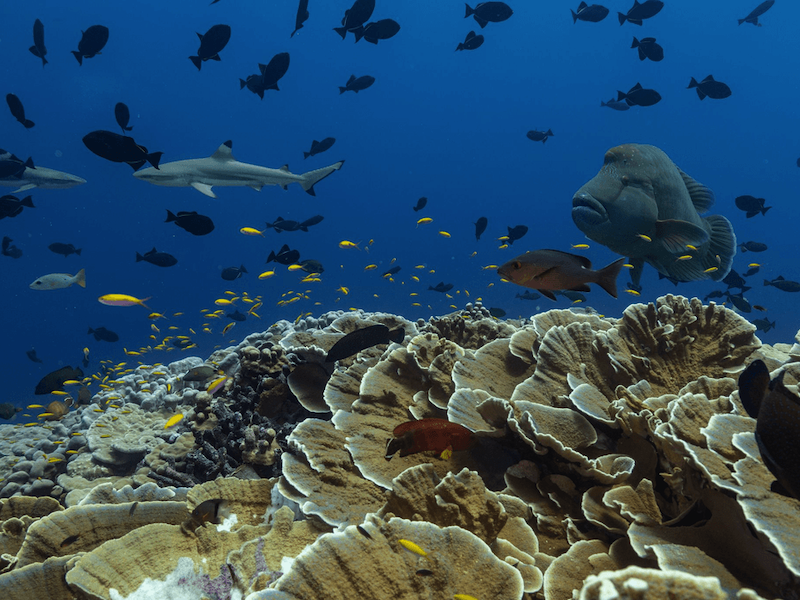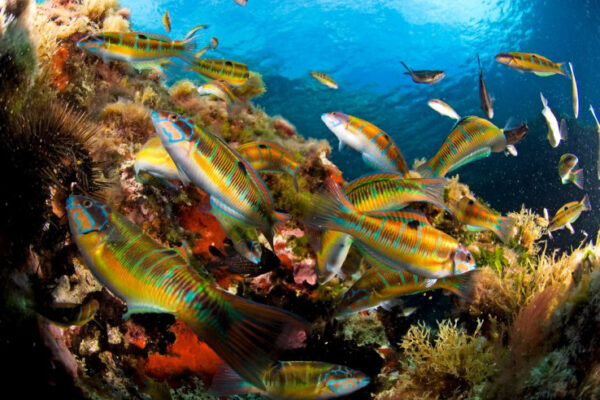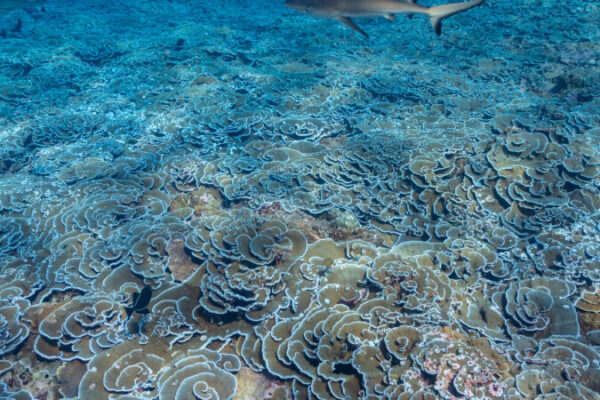
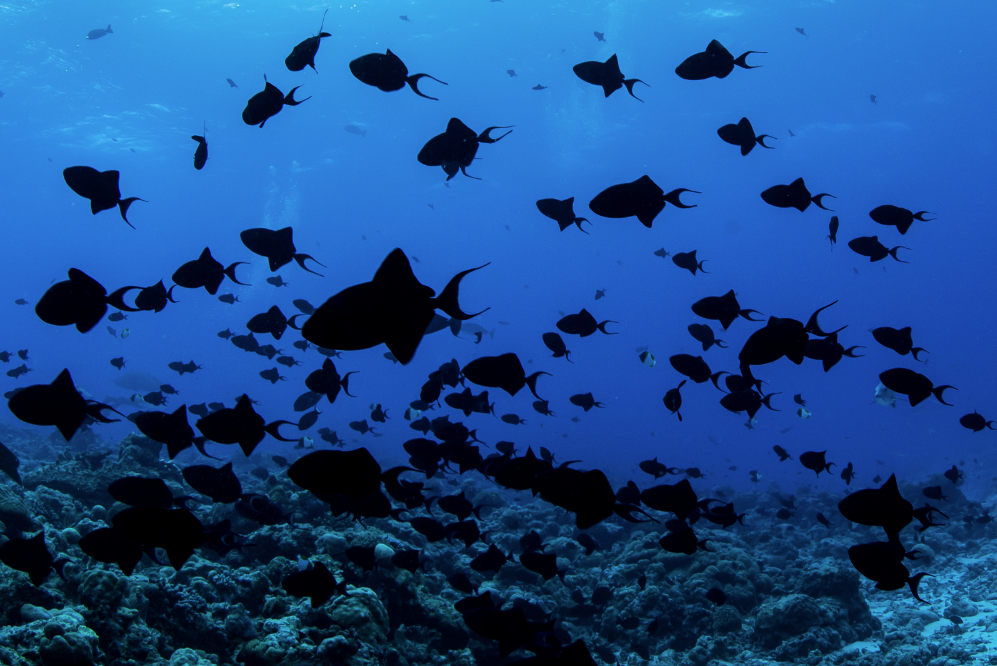
Shallow-water creatures, like these corals, are extremely vulnerable to carbonic acid. Scientists are calling for drastic measures to avert massive bleaching of the world's reefs.
Photograph by Ove Hoegh-Guiderg/AFP/Getty Images
For tens of millions of years, Earth's oceans have maintained a relatively stable acidity level. It's within this steady environment that the rich and varied web of life in today's seas has arisen and flourished. But research shows that this ancient balance is being undone by a recent and rapid drop in surface pH that could have devastating global consequences.
Since the beginning of the industrial revolution in the early 1800s, fossil fuel-powered machines have driven an unprecedented burst of human industry and advancement. The unfortunate consequence, however, has been the emission of billions of tons of carbon dioxide (CO2) and other greenhouse gases into Earth's atmosphere.
Scientists now know that about half of this anthropogenic, or man-made, CO2 has been absorbed over time by the oceans. This has benefited us by slowing the climate change these emissions would have instigated if they had remained in the air. But relatively new research is finding that the introduction of massive amounts of CO2 into the seas is altering water chemistry and affecting the life cycles of many marine organisms, particularly those at the lower end of the food chain.
Carbonic Acid
When carbon dioxide dissolves in this ocean, carbonic acid is formed. This leads to higher acidity, mainly near the surface, which has been proven to inhibit shell growth in marine animals and is suspected as a cause of reproductive disorders in some fish.
On the pH scale, which runs from 0 to 14, solutions with low numbers are considered acidic and those with higher numbers are basic. Seven is neutral. Over the past 300 million years, ocean pH has been slightly basic, averaging about 8.2. Today, it is around 8.1, a drop of 0.1 pH units, representing a 25-percent increase in acidity over the past two centuries.
Carbon Storehouse
The oceans currently absorb about a third of human-created CO2 emissions, roughly 22 million tons a day. Projections based on these numbers show that by the end of this century, continued emissions could reduce ocean pH by another 0.5 units. Shell-forming animals including corals, oysters, shrimp, lobster, many planktonic organisms, and even some fish species could be gravely affected.


Equally worrisome is the fact that as the oceans continue to absorb more CO2, their capacity as a carbon storehouse could diminish. That means more of the carbon dioxide we emit will remain in the atmosphere, further aggravating global climate change.
Scientific awareness of ocean acidification is relatively recent, and researchers are just beginning to study its effects on marine ecosystems. But all signs indicate that unless humans are able to control and eventually eliminate our fossil fuel emissions, ocean organisms will find themselves under increasing pressure to adapt to their habitat's changing chemistry or perish.
Did You Know?
Pteropods, tiny sea snails whose existence is threatened by ocean acidification, are an important food source for some whales.
More About Acidification
-
The Acid Sea
The carbon dioxide we pump into the air is seeping into the oceans and slowly acidifying them. One hundred years from now, will oysters, mussels, and coral reefs survive?
-
Oceans Becoming Acidic Ten Times Faster Than Thought
Increasing levels of carbon dioxide in the atmosphere may make Earth's oceans more acidic faster than previously thought.
-
Ocean Acidification Threatens Food Webs
Ocean acidification could affect marine food webs and lead to substantial changes in commercial fish stocks, threatening protein supply and food security for millions of people.
Photo Galleries
Take Action
Ocean Topics
-
Acidification
-
Ballard, Robert
-
Bowermaster, Jon
-
Cook-Wise
-
De Rothschild, David
-
Doubilet, David
-
Earle, Sylvia
-
Frozen Seafood Benefits
-
Goodman, Beverly
-
Habitat Destruction
-
Invasive Species
-
Kristof, Emory
-
Marine Food Chain
-
Marine Pollution
-
Nicklen, Paul
-
Norman, Brad
-
Ocean Overview
-
Overfishing
-
Plastiki
-
Pristine Seas Expeditions
-
Sala, Enric
-
Seafood Decision Guide
-
Seafood Substitutions
-
Sea Level Rise
-
Sea Temperature Rise
-
Seaver, Barton
-
Sustainable Seafood
-
Thys, Tierney
-
Tips to Save the Ocean
Advertisement
National Geographic Magazine
-
Tide Pools Pictures
A cast of thousands clings to rocky real estate in a narrow strip of shore called the intertidal zone.
-
Great Barrier Reef Photo Gallery
From tiny coral polyps grew a marvel: Australia’s Great Barrier Reef. Could it all come crumbling down?
-
The Acid Sea
Carbon dioxide we pump into the air is seeping into the ocean and slowly acidifying it.
Your Ocean
-
For Kids
Learn about the ocean with activities, photos, and games.
-
Ocean Education
Bring engaging and important ocean learning to your classroom.
Support the Ocean
Help protect the last healthy, undisturbed places in the ocean so we can learn how to help healthy reefs thrive, help unhealthy reefs recover, and better preserve the ocean.
Explore the Ocean
-
Ocean Life
Order ocean books, DVDs, maps, and more from the National Geographic online store.
-
Ocean Special Issue
Explore the world's oceans, from their prehistoric beginnings to modern-day efforts to preserve their natural wonder.
-
Ocean: An Illustrated Atlas
Immerse yourself in the wonders of the deep through colorful maps, photos, and satellite images.
Engage, Conserve, Restore
-
Freshwater Initiative
The National Geographic Society’s freshwater initiative is a multi-year global effort to inspire and empower individuals and communities to conserve freshwater and preserve the extraordinary diversity of life that rivers, lakes, and wetlands sustain.