The Ocean

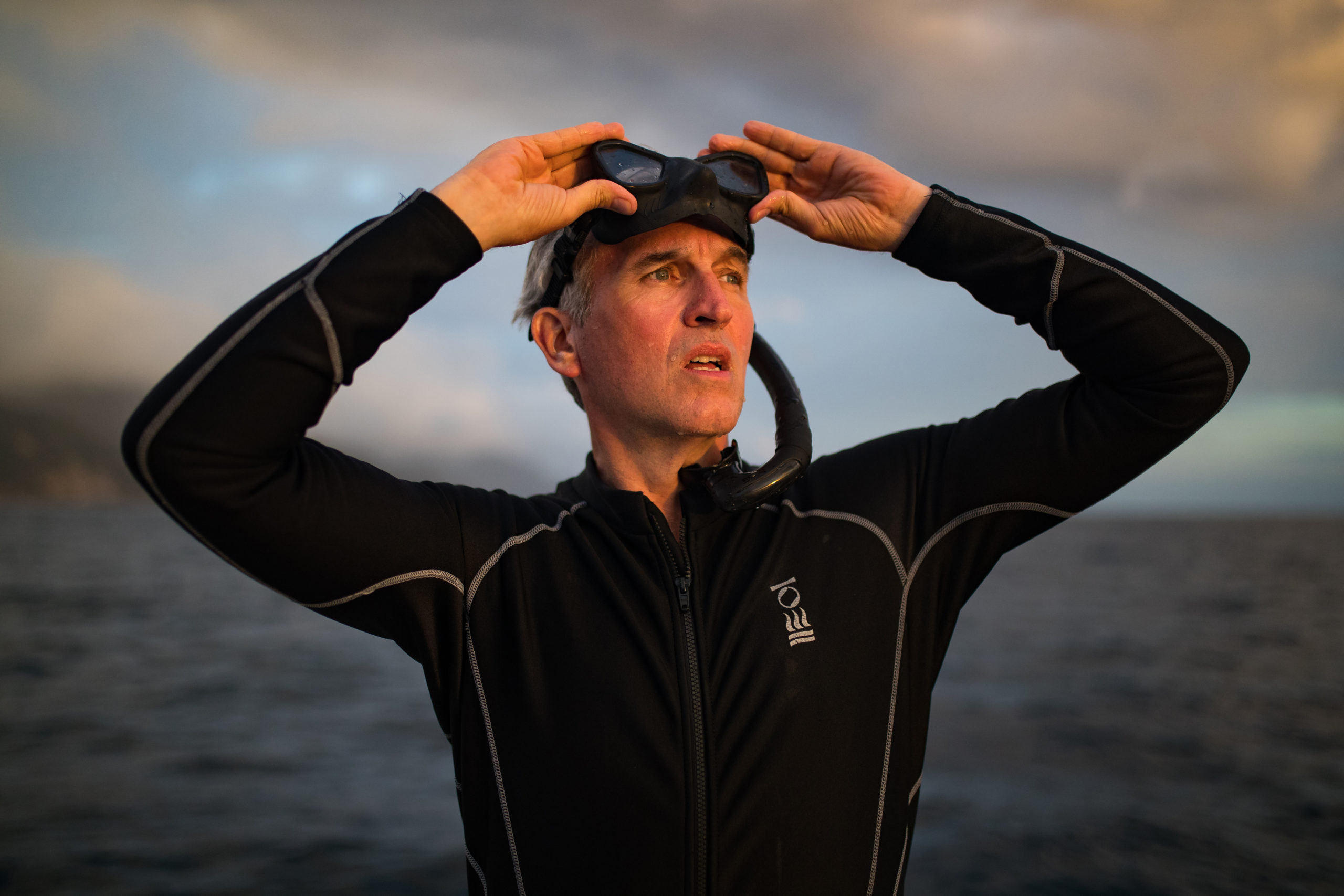
Photo: Beverly Goodman

Photograph by G. Anker

Name: Beverly Nicole Goodman
Place of Birth: Milwaukee, Wisconsin
Current Home: Caesarea, Israel
Occupation: Geoarchaeologist, marine archaeologist

What did you want to be when you were growing up?
Growing up, I was always changing what I wanted to be when I grew up. I wanted to be an archaeologist, an architect, a painter, a photographer, a pianist, a deep sea explorer. Today I do a little bit of all of these things!

How did you get started in your field?
When I was young I was inspired by visits to museums, finding arrowheads around my home, and the time I spent in and on water. My grandfather loved boating and took all of his grandchildren out on the lakes in Wisconsin and on trips to visit historical ships and submarines. Eventually, these all came together when I studied anthropology and geology in university.

What is a typical day like for you?
First, no day is typical! Days in the field usually start early, around 5 a.m. I wake up, gather up tools and equipment, and check that all my gear is in good shape. When we are working from a ship everyone is doing their own morning preparations until we meet for a bite to eat in the ship’s galley, usually at about 7 a.m.

During breakfast we review what we plan to do that day, and raise any questions or issues that came up from the previous day. After breakfast, we head to the work location and anchor. I brief the dive team and topside team on the specifics of the work, we do final checks on the dive gear and equipment, and then head into the water. Each dive lasts about three hours, and we try to do as much work as we can in a day because paying for a day on the ship is expensive!

When we are collecting cores, each core comes onto the ship and the important details are recorded—position, water depth, core penetration, etc. The core then gets an official catalogue number that will be used during all of its analysis. At the end of the day after we get out of the water we begin taking care of all of the equipment for the next day—washing, greasing, opening, fixing. We take a look at the maps and see what we have finished and what we must do next. When we are excavating an archaeological site we review the drawings and photos and make certain that any artifacts that have been removed from the site are properly tagged, catalogued, and are in the midst of the series of conservation steps to protect the item.

During the evening I check my field notes and rewrite anything that is unclear, improve sketches and drawings, and enter information into the computer for safekeeping.

Days in the laboratory or office are quite different. Laboratory analysis takes months and months and requires a lot of patience. The samples that are collected in the field undergo rigorous analytical treatment in order to understand the history of a coastline or archaeological site. Throughout the day, students and research assistants help me to work through the thousands of small samples of sediment.

In addition to my work, I’m also a mom and wife—so at the same time I usually have one ear to the phone in case there is a problem with one of my loved ones. Many times I bring the kids to work to do things that they can, like counting snails or rinsing sand. They especially love going on the boats, and sometimes amazing things happen like swimming with wild dolphins. On days when I am working near home I take my youngest on the bicycle or in a hiking pack to his day care. Our "commute" is along the seashore and passes by a Roman aqueduct, hippodromes, crusader fortifications, and more. Every day we see something new!

What inspires you to dedicate your life to the ocean?

The ocean, to me, is everything. The surface of our planet is dominated by water. In fact it should be called planet Water instead of planet Earth! The importance of the ocean in the entire Earth’s system of our climate, atmosphere, and daily life is endless. It is taken for granted by many, but every drop of water we drink, every raindrop that falls, has traveled a great distance and is connected to all the oceans of the world. The air we breathe is in part courtesy of the ocean’s photosynthetic properties. The great expanses of the oceans and seas are home to a diversity and range of wildlife and creatures with unique characteristics and ways of living that could be key to our own survival.

My research on the coastlines and in particular on tsunami events is in part to help encourage respect and harmony between human needs and settlement and the natural rhythms and behavior of the ocean. Because the contents of the sea are "underneath" and therefore "invisible" to the average person, it becomes much too easy to take it for granted and to not be concerned about how our actions are having an impact on the depths. I want to be among the people to recognize and describe what is happening in this unseen world—so that others might see it through my eyes and efforts and therefore be concerned about what we risk destroying.

What has been your favorite experience in the field?
Wow, there are so many great experiences. It is difficult to choose one. Sometimes my work draws the curiosity of critters in the neighborhood. When I am sediment coring it makes a bit of noise and tends to shake the seafloor—bringing up lots of yummy little snacks for nearby predators. It's not uncommon to pause from working and discover a strange group of spectators including cuttlefish—which look like hovering alien spacecraft, octopi, trumpetfish, eels and more. One must keep an eye on the octopi; they like to steal pencils.

However, one of the most amazing experiences was a few years ago in the Red Sea. A young dolphin was spotted regularly in the Gulf of Eilat-Aqaba, often approaching boats and befriending people. We anchored in our collection spot and before we knew it, the young dolphin came by to say hello. He was nicknamed Marco by some of the locals and for a few months he would come join us on our collections. While he was completely wild, and born free, he loved to come close and give little bumps with his snout, swim together with the divers, and "play." He was always gentle and friendly. At some point he went on his way and hasn't been spotted since.

Do you have a hero?
I have had a few heroes, some fictitious, some alive, some not. Jacques Cousteau was my introduction to the sea, Bob Ballard’s discovery of the Titanic inspired me as a child to ignore the word "impossible," Atticus Finch provided a moral standard, and Indiana Jones made it all seem like a lot of fun.

If you could have people do one thing to help the ocean, what would it be?
As delicious, tasty, and healthy as it is, we need to reduce our consumption of seafood and ocean fish. The oceans were long considered an endless, inexhaustible source of food—but in the last century we have learned that we can, and do, greatly impact and are threatening the entire balance of the oceans.

Managing fishing practices on a global scale is an incredible challenge, and unfortunately many effective conservation efforts are only adopted when the effects are already having a negative impact on both the humans and wildlife. Removing the demand for these products, in tandem with battling for the adoption of better practices and lobbying for the protection of certain areas from fishing entirely can help battle this issue.

In simplest terms, if everyone chose to do more of the R's—reduce, reuse, recycle, and I must add another R, take responsibility for the history behind the food you eat and the products you buy—this could help to save the ocean.

More About Ocean Heroes

  • beverly-goodman-blog-wild.jpg

    Tiger Shark or Red Sea Rooster?

    National Geographic Emerging Explorer Beverly Goodman sends word from the Red Sea of a too-close encounter with a tiger shark—or was it a giant rooster?

  • Photo: Great Nicobar Island after tsunami

    Science of Tsunamis

    When the Earth trembles, the ocean echoes with devastating power. Get the facts about the forces involved.

  • Video: Investigating Cultural Heritage

    National Geographic explorers Christina Conlee and Beverly Goodman investigate past tsunami sites and save archaeological treasures before looters can do their damage.

Ocean Topics

National Geographic Magazine

  • Photo: Waves crashing over rocks covered with sea grass and kelp

    Tide Pools Pictures

    A cast of thousands clings to rocky real estate in a narrow strip of shore called the intertidal zone.

  • Photo: Parrotfish smile, Heron Island Great barrier Reef, Australia

    Great Barrier Reef Photo Gallery

    From tiny coral polyps grew a marvel: Australia’s Great Barrier Reef. Could it all come crumbling down?

  • Photo: Seafloor bubbling due to the higher levels of CO2

    The Acid Sea

    Carbon dioxide we pump into the air is seeping into the ocean and slowly acidifying it.

Get More From the Magazine »

Your Ocean

  • Photo: Clown anemonefish

    For Kids

    Learn about the ocean with activities, photos, and games.

  • Photo: A school of fish and a shark swim in a coral reef.

    Ocean Education

    Bring engaging and important ocean learning to your classroom.

Support the Ocean

Explore the Ocean

  • shark-eden-ocena-store-promo.jpg

    Ocean Life

    Order ocean books, DVDs, maps, and more from the National Geographic online store.

  • Photo: Leopard seals on a glacier

    Ocean Special Issue

    Explore the world's oceans, from their prehistoric beginnings to modern-day efforts to preserve their natural wonder.

  • citizens-of-the-sea-book-promo.jpg

    Citizens of the Sea

    Dive into astonishing diversity of ocean life from marine scientist Nancy Knowlton and the Census of Marine Life.