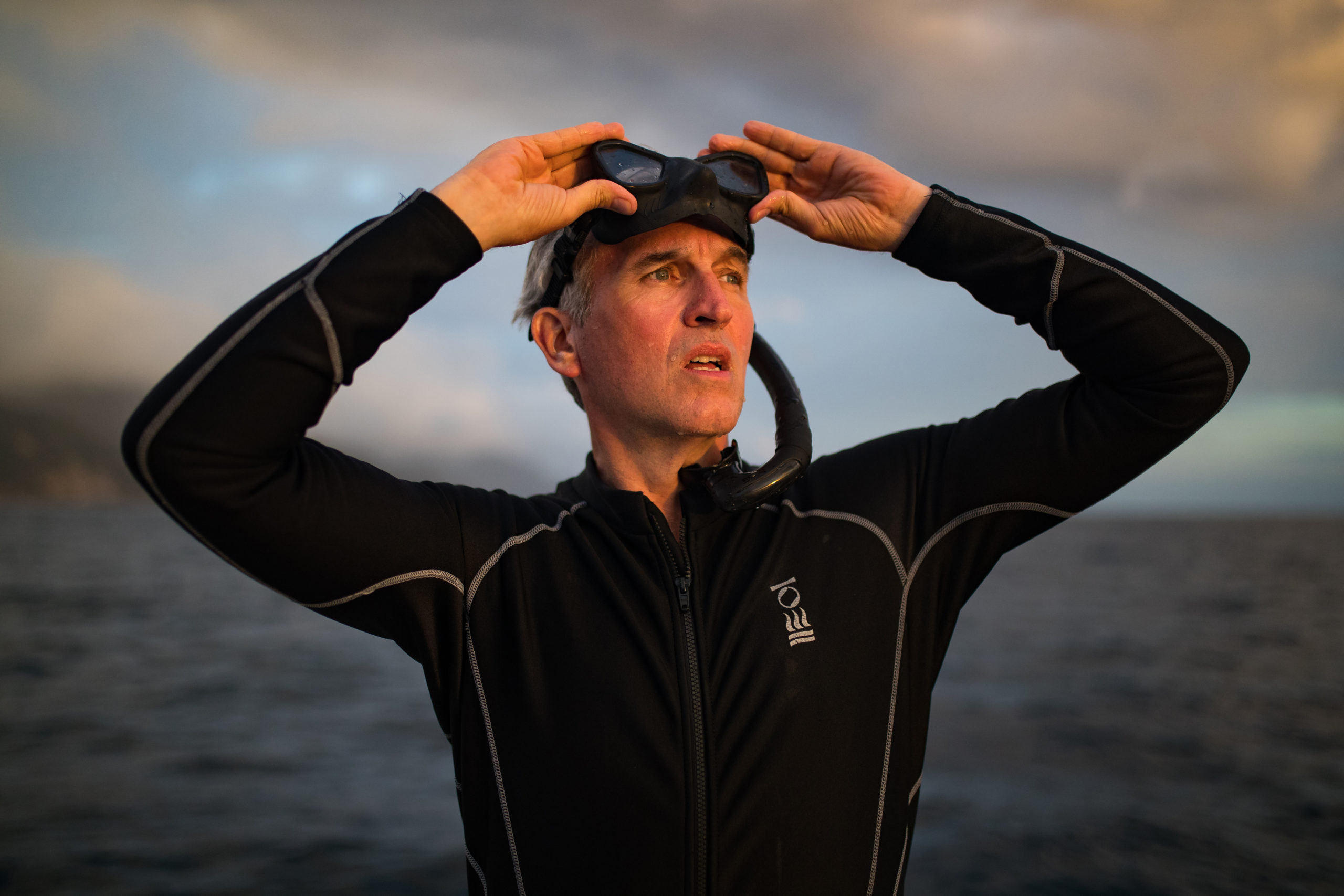
Photograph courtesy Robert Ballard
Name: Dr. Robert D. Ballard
Place of Birth: Wichita, Kansas
Current Home: Lyme, Connecticut
Occupation: Undersea explorer/earth scientist and oceanographer
What did you want to be when you were growing up?
I wanted to be Captain Nemo and explore the world beneath the sea.
How did you get started in your field?
When I was 16 years old (50 years ago) I wrote a letter to the Scripps Institution of Oceanography telling them I wanted to be an oceanographer some day and asking them what I should do. They wrote back and told me about a summer scholarship given to juniors in high school, which I was, that I could apply for. I did and received the scholarship to spend the summer at Scripps. I was further selected from a group of about 20 or so kids to go to sea on research ships. During my second cruise that summer our ship was struck by a rogue wave that almost sank the ship. I was hooked for life.
What is a typical day like for you?
When I am at home in Lyme I get up and do a power walk down to the Connecticut River and back, which takes about 45 minutes. I enjoy watching the forest and wetlands change over the seasons and all of the wildlife that lives around us. While walking I think about what I am going to do. Either I stay at home all day or most of the morning to work in my office and look out across the wetlands to the river, go into my office at the Institute for Exploration in Mystic to meet with my staff and plan all of the things I have do over the next several weeks, or make plans for our visitor center, or drive to my office at the Center for Ocean Exploration and Archaeological Oceanography to meet with my graduate students and research colleagues to plan the exploration plan for our new ship of the exploration the E/V Nautilus. Or I am on the road raising money to support these worlds. And if I am really lucky, I am aboard the Nautilus doing what I really love—exploring.
What inspires you to dedicate your life to the ocean?
I am really dedicated to understanding the planet/creature on which we live and know that means I must go beneath the sea to see 72 percent of what is going on.
What has been your favorite experience in the field?
Working with a great team of scientists and engineers that are smarter than me but also dedicated to exploring the Earth like me and also interested in using the excitement of our explorations to capture the imagination of the next generation of explorers that are presently in middle school.
Do you have a hero?
Other than Captain Nemo I would have to say my father, who was an orphan and cowboy who overcame all sorts of obstacles to become the Chief Engineer of the Minuteman Missile Program, and my mother, who is now 93 years old and still taking care of my younger, 64-year-old sister.
If you could have people do one thing to help the ocean, what would it be?
I think the most important thing people can do to save our planet and the human race is to empower women! And that’s a long story!
More About Ocean Heroes
-
Nautilus Live
Follow along as Dr. Robert Ballard and his team undertake an exciting expedition on the E/V Nautilus to study underwater volcanoes, investigate unusual life forms, explore shipwrecks, and more.
-
TED Talk on Exploring Oceans
Ocean explorer Robert Ballard takes us on a mind-bending trip to hidden worlds underwater, where he and other researchers are finding unexpected life, resources, even new mountains.
-
Bob Ballard Titanic Interview on NG Weekend
National Geographic Explorer-in-Residence Bob Ballard talks about his historic discovery of the sunken R.M.S. Titanic and more recent adventures.
-
Ballard Gets His Dreamboats
Bob Ballard’s new fleet of telepresence-enabled research vessels is changing how discoveries are made.
Ocean Topics
-
Acidification
-
Ballard, Robert
-
Bowermaster, Jon
-
Cook-Wise
-
De Rothschild, David
-
Doubilet, David
-
Earle, Sylvia
-
Frozen Seafood Benefits
-
Goodman, Beverly
-
Habitat Destruction
-
Invasive Species
-
Kristof, Emory
-
Marine Food Chain
-
Marine Pollution
-
Nicklen, Paul
-
Norman, Brad
-
Ocean Overview
-
Overfishing
-
Plastiki
-
Pristine Seas Expeditions
-
Sala, Enric
-
Seafood Decision Guide
-
Seafood Substitutions
-
Sea Level Rise
-
Sea Temperature Rise
-
Seaver, Barton
-
Sustainable Seafood
-
Thys, Tierney
-
Tips to Save the Ocean
World Oceans Summit
In association with National Geographic, The Economist is hosting the World Oceans Summit to examine the future of the seas and discuss sustainable use of the oceans. Speakers include National Geographic Explorers-in-Residence Sylvia Earle and Enric Sala and World Bank President Robert Zoellick, among others. Valued members of the National Geographic Society community receive a 20 percent discount to attend the summit—reserve your place today (select ‘standard rate’ and enter discount code ‘NATGEO’).
Advertisement
National Geographic Magazine
-
Tide Pools Pictures
A cast of thousands clings to rocky real estate in a narrow strip of shore called the intertidal zone.
-
Great Barrier Reef Photo Gallery
From tiny coral polyps grew a marvel: Australia’s Great Barrier Reef. Could it all come crumbling down?
-
The Acid Sea
Carbon dioxide we pump into the air is seeping into the ocean and slowly acidifying it.
Your Ocean
-
For Kids
Learn about the ocean with activities, photos, and games.
-
Ocean Education
Bring engaging and important ocean learning to your classroom.
Support the Ocean
Help protect the last healthy, undisturbed places in the ocean so we can learn how to help healthy reefs thrive, help unhealthy reefs recover, and better preserve the ocean.
Explore the Ocean
-
Ocean Life
Order ocean books, DVDs, maps, and more from the National Geographic online store.
-
Ocean Special Issue
Explore the world's oceans, from their prehistoric beginnings to modern-day efforts to preserve their natural wonder.
-
Citizens of the Sea
Dive into astonishing diversity of ocean life from marine scientist Nancy Knowlton and the Census of Marine Life.